


Media stakeholders have been urged to give greater prominence to issues affecting women and other marginalised group.
“Women and members of other such marginalized groups should be routinely reflected as important news sources in addition to focusing attention on how they are impacted by government policies, programmes and actions.
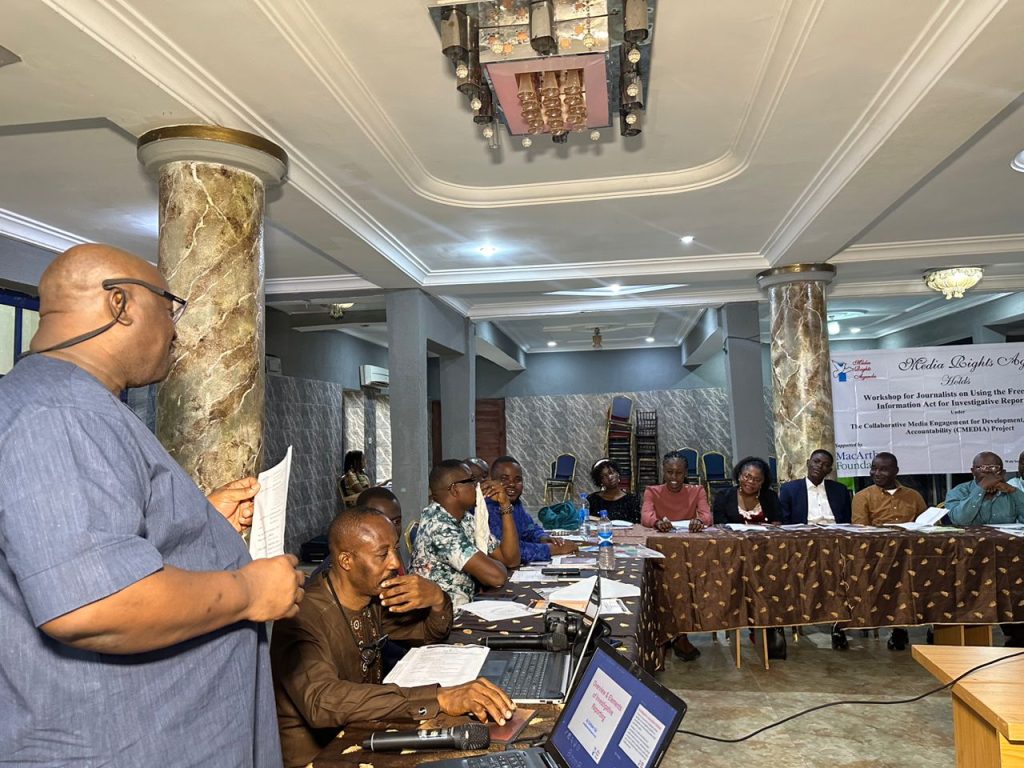
This was part of the communique adopted by 30 participants from the SouthWent shortly after the end of a two day workshop on. “Using the Freedom of Information Act for Investigative
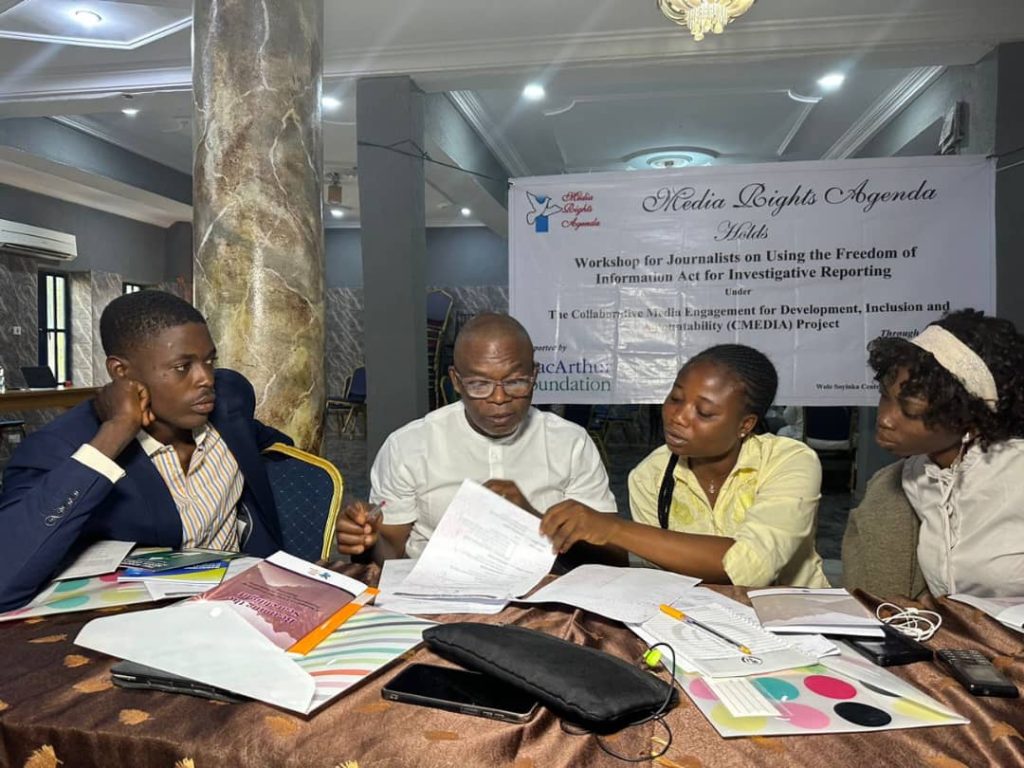
Reporting”organised by the Media Rights Agenda (MRA) with support from the MacArthur Foundation through the Wole Soyinka Centre for Investigative Journalism (WSCIJ) under the Collaborative Media Engagement for Development, Inclusion and Accountability (CMEDIA) Project.
It was also recommended that Media stakeholders should devote more time, efforts and resources into creating awareness for the Freedom of Information Act among journalists and building their capacity to utilize the Law.
This, it stated would engender better and more impactful reporting of various issues relating to transparency, accountability, good governance and development
The communique urged stakeholders to put more efforts and resources into providing continuous training for journalists in other areas such as investigative reporting techniques, fact-checking and information verification tools and approaches including the use of artificial intelligence and other emerging technologies which can aid their work.
“Journalists, particularly those engaged in investigative reporting, should routinely make available documents, records and data, including the annual budgets of Federal and State Governments, their audited public accounts, and other reports for information.”
“They should analyze such documents, records and data to ascertain their level of compliance with applicable laws, rules, regulations, codes and other standards.
“Any identified breaches should be the basis of reporting aimed at holding the government involved accountable,” it stated.
Journalists, the communique recommended, should take advantage of various tools, which are available digitally, online and offline, which it said could enhance their work in conducting research; analysing data; verifying information among others by identifying such tools, obtaining them and learning how to use them to improve their reporting.
The FOI Act is described as a powerful tool for information gathering for journalists and other media professionals and can significantly improve the quality of routine and in-depth media reporting.
Accordingly, journalists should make efforts to read the Act and familiarize themselves with it to enable them use it effectively for enhanced reporting.
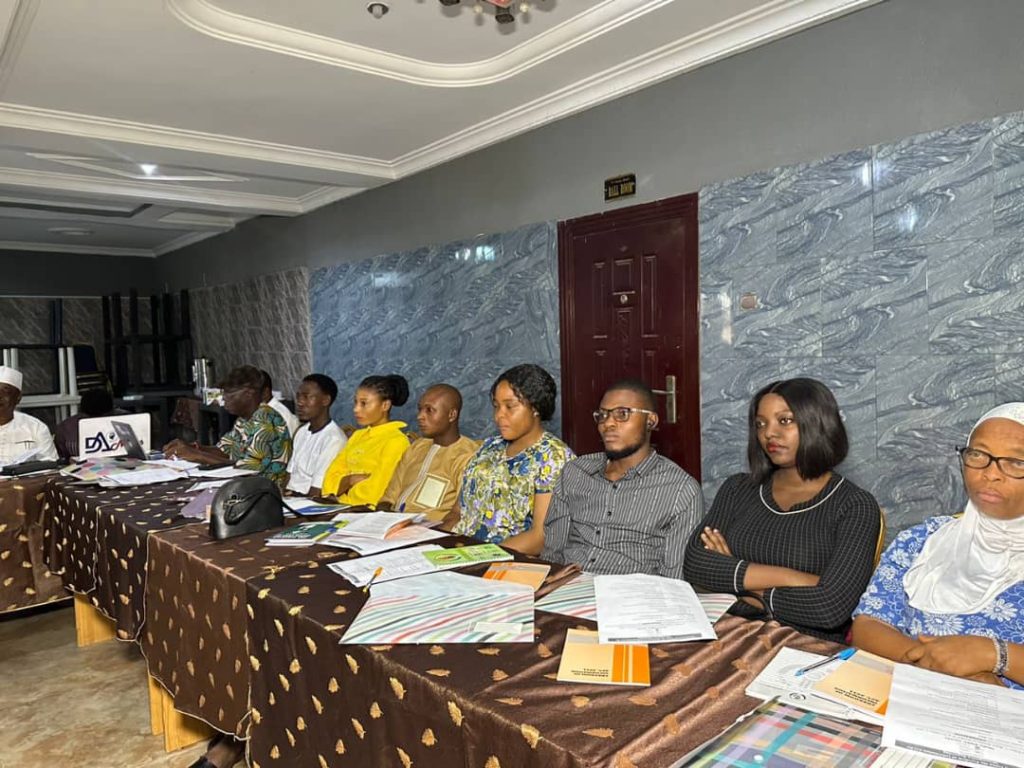
The workshop which drew participants such as media professionals from broadcast, print and online organizations from different states across south-west geo-political zone, was aimed at sensitizing participating journalists and building their capacity to effectively use the Freedom of Information (FOI) Act for investigative reporting by familiarizing them with the key provisions of the Act.
This includes how to make requests for information under the Act to increase their chances of success, enforcement mechanisms and options available to them whenever they are wrongfully denied access to any information requested.
It also highlighted the importance of the Freedom of Information Act in empowering investigative journalists to access crucial information in the custody of public institutions and other non- entities to which the Act applies.
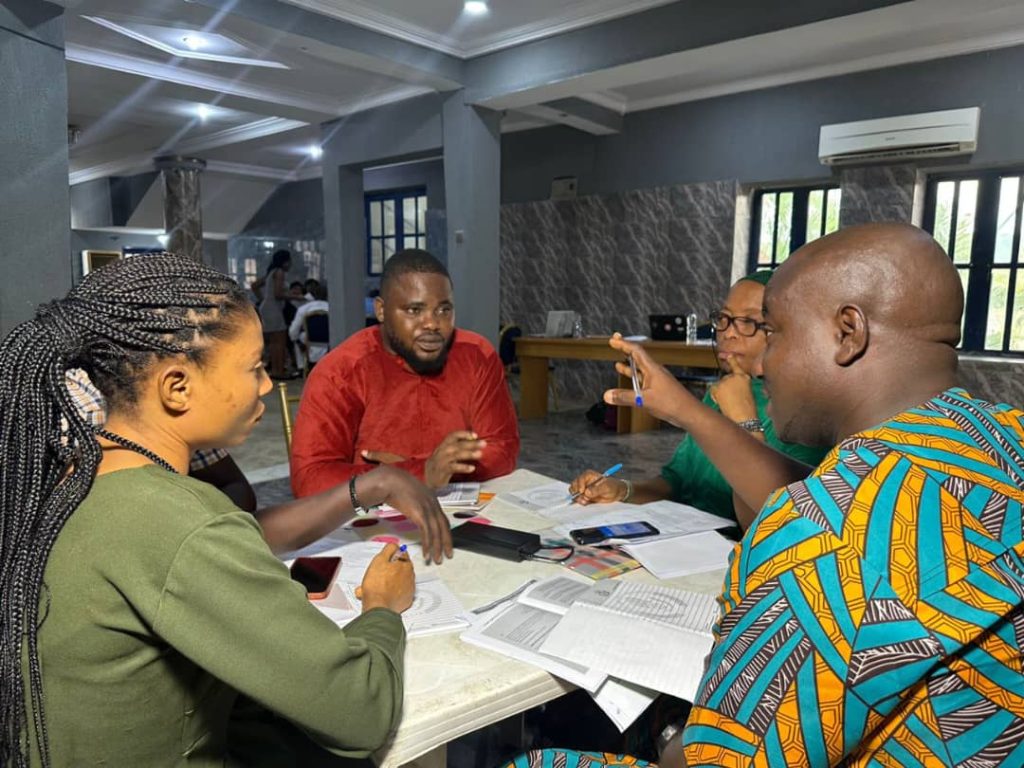
Highlights of the workshop included plenary presentations and break-out sessions which addressed different topics including: an Overview and Elements of Investigative Reporting; The Role of Records and Documents in Investigative Reporting; Understanding the Freedom of Information Act, 2011; The FOI Act and Investigative Reporting; and How Journalists and the Media Can Use the FOI Act.
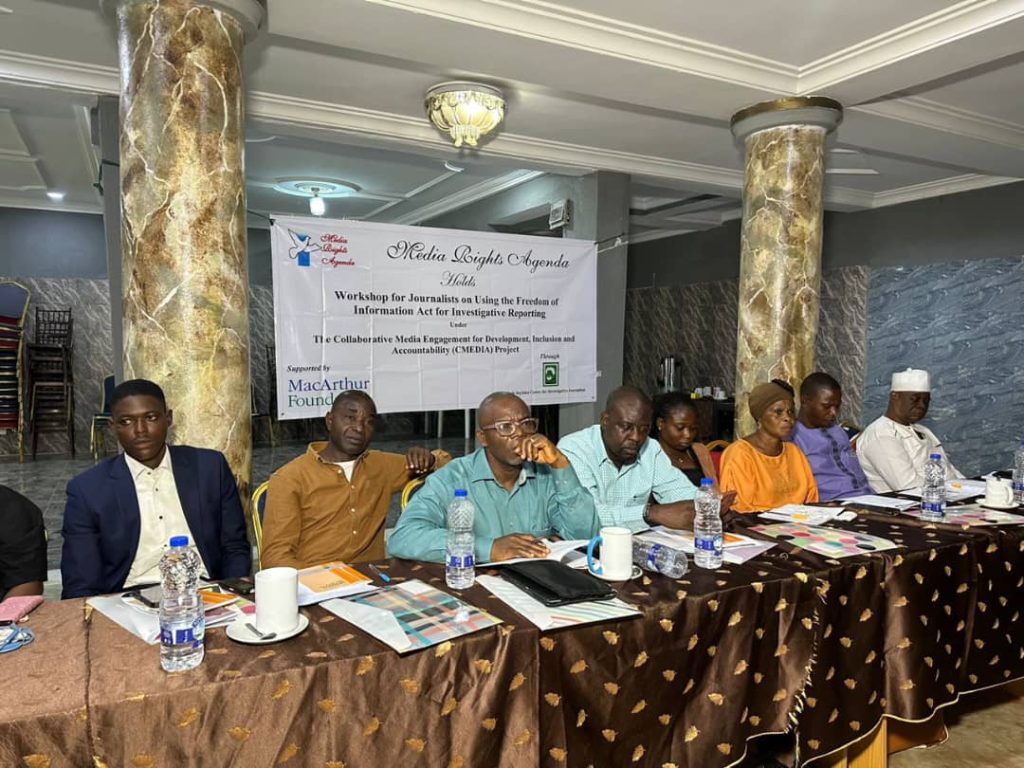
Other topics treated were; Fact-checking and Investigative Reporting; Making Requests for Information Under the Freedom of Information Act; Deciding What Investigative Reports to Carry Out; Interviews in Investigative Reporting; and How to Present Stories from Investigative Reporting.