
FRSC records 61.29% sharp drop in tanker fatalities
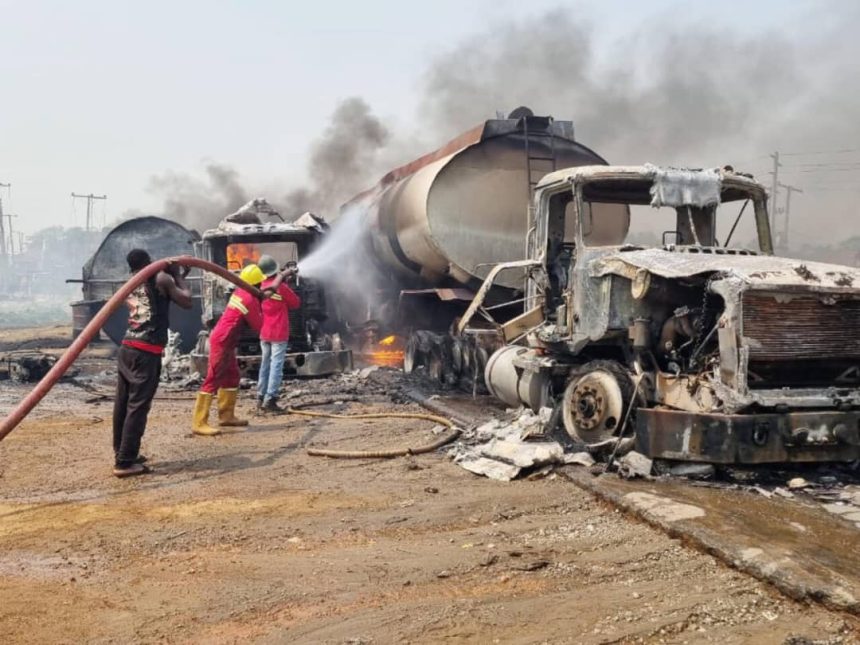
The Federal Road Safety Corps has announced a major breakthrough in its sustained campaign against tanker- and trailer-related crashes, recording a 61.29 per cent reduction in fatalities and a 15.53 per cent decline in the crash severity index in 2025.
The corps attributed the gains to the effective implementation of the Safe-to-Load Programme under the leadership of the Corps Marshal, Shehu Mohammed.
Speaking at the flag-off of the 2026 technical training for FRSC desk officers at petroleum depots and terminals in Lagos, the Corps Marshal described the figures as clear validation of the agency’s data-driven enforcement model and inter-agency collaboration framework.
He explained that the Safe-to-Load Programme, introduced in 2015 alongside Nigeria’s alignment with global safety protocols for the transportation of dangerous goods, has significantly improved compliance across the petroleum haulage sector.
Despite the progress, the Corps Marshal stressed that the FRSC would not relent in its pursuit of zero fatalities.
He warned that any tanker failing to meet Safe-to-Load requirements would be denied loading without exception, adding that all tanker-related crashes would attract comprehensive investigations across the entire value chain, from depot operators to vehicle owners.
He also condemned persistent violations such as tampering with speed-limiting devices and poor maintenance culture, describing them as unacceptable threats to national safety.
Reaffirming the corps’ renewed enforcement posture, he declared that “the era of impunity on Nigerian roads is over,” noting that the Safe-to-Load Programme is now a national safety imperative rather than merely a regulatory tool.
He urged operators, drivers and stakeholders to embrace total compliance, emphasising that every avoided crash represents lives saved, property protected and national resources preserved.
FRSC spokesperson, Osondu Ohaeri, said in a statement that compliance with Class G driver’s licence requirements had risen from 58.2 per cent at inception to 99.4 per cent, while installation of critical safety components such as API-standard leak-proof systems had reached 98.3 per cent.
He added that the corps remains committed to deepening technology-driven monitoring systems, strengthening personnel capacity, and sustaining strategic partnerships with the Nigerian Midstream and Downstream Petroleum Regulatory Authority, MEMAN, DAPPMAN, NARTO, NUPENG and IPMAN.
Culled from keadrship



