

15,000 Metres Delivered as Ondo Rolls Out Flexible Pay Plan
As over 15,000 subsidised metres have been distributed across the 18 local government areas, the Ondo State Government has unveiled an instalment-based metering scheme under the OdaTiwa Meters Initiative, designed to simplify access to prepaid electricity metres for households and small businesses across the state.
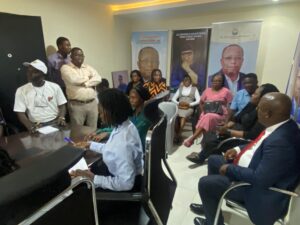
The Commissioner for Energy and Mineral Resources, Engr. Johnson Alabi, made this known during a press briefing in Akure on Monday, 1 December.
Alabi said many households and small businesses are willing to acquire prepaid metres but are unable to pay the full cost upfront, a challenge that prompted the government to adopt a more flexible approach.
“Many households and small businesses are willing to obtain prepaid metres but are unable to pay the full cost upfront. That is the reason we have decided to introduce this metering initiative to the residents of Ondo State, enabling them to pay by instalments.”

Under the new arrangement, customers can obtain either single-phase or three-phase metres by making a small initial deposit, while the balance is spread across three to six months, depending on preference.
“You first pay a little part, and the balance is spread over three to six months. Once you complete the payment, the metre begins to work for you immediately.”
He explained that the initiative will also help to address long-standing challenges of slow metering rollout, estimated billing, and customer dissatisfaction across electricity distribution networks operating in the state.
“The government has introduced this initiative with the mindset of simplifying access to metering, because metering happens to be a key part of electricity supply.”
The commissioner noted that the OdaTiwa platform allows consumers to monitor payments on a dedicated portal, while the state’s server communicates remotely with all installed metres to ensure transparency and detect bypass attempts.
“Since the introduction of this initiative, the Ondo State Government has supplied over 15,000 subsidised metres to residents across the 18 local government areas of the state.”
He added that the state has secured over 50,000 metres from multiple certified Metre Access Providers for this new instalment rollout.
In a major policy shift, the commissioner announced that the state government will, beginning next year, commence the development of an independent Ondo State electricity grid, marking a gradual transition away from reliance on the national grid.
According to him, the government is already working on plans for generation, transmission, and distribution within the state.
“One of the plans we have for next year is to develop a state grid, where Ondo State is no longer working with the national grid. And if that is going to happen, Ondo State must generate its own electricity.”
To curb electricity theft and other infractions, the commissioner announced that the Chief Judge of Ondo State has established three Special Offences Courts, one in each senatorial district.
These courts, he said, began operations immediately following their recent creation and are dedicated to prosecuting electricity-related offences, including metre bypass and illegal connections.
Alabi warned residents against electricity theft, stressing that the new Ondo State Electricity Power Sector Law 2020, as amended, would be strictly enforced.
“Electricity theft is a criminal offence. Anyone found wanting will face the full wrath of the law.”
Responding to questions on communities purchasing transformers and poles, Alabi said although such practice is “not ideal”, the government continues to support communities in need while encouraging them to channel complaints through the Ondo State Electricity Regulatory Bureau.
He reiterated that electricity distribution has been privatised and that Benin Electricity Ondo Limited (BEOL) is responsible for materials and infrastructure, not residents.
Alabi encouraged residents to embrace the metering scheme, noting that some consumers still resist prepaid metres due to misconceptions. He emphasised that prepaid metering remains the most effective way to manage electricity consumption and avoid inflated or estimated bills.
He assured that the administration of Governor Lucky Aiyedatiwa remains committed to improving electricity access and supply across.


