


Ondo govt trains livestock experts to enhance farming practices
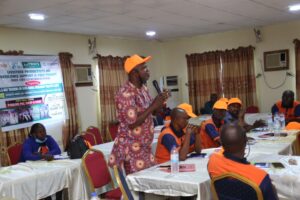
Determined to bolster food security in Ondo State, the government has equipped around forty extension agents and livestock community service providers with advanced skills in Good Animal Husbandry Practices (GAHP).
The training, organised by the State Livestock Productivity and Resilience Support (L-PRES) Project, took place in Igbara-Oke, the administrative centre of Ifedore Local Government Area.
Addressing the participants, the State L-PRES Project Coordinator, Mr Olufemi Adeogun, emphasized that the training was a vital aspect of the project’s implementation, aimed at enhancing livestock resilience and commercialization in the state.
In a statement issued by the Ondo L-PRES Project Communication/ICT Officer, Augustine Adeoye, and made available to the media, Mr Adeogun noted that equipping extension agents and community livestock service providers with modern knowledge and techniques is essential for improving livestock rearing practices.
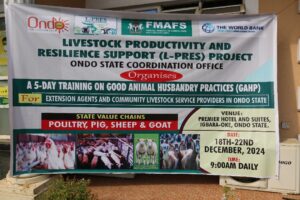
He urged the trainees to apply and disseminate the knowledge acquired during the training to livestock farmers, as their role involves directly educating and supporting farmers.
Mr Adeogun expressed gratitude to the state governor, Hon. Lucky Aiyedatiwa, for embracing the L-PRES Project, which he said would significantly enhance livestock production, resilience, and commercialization in Ondo State.
“This training is crucial for keeping up with emerging technologies in animal husbandry practices, which lead to better productivity.
“Our goal is for those we have trained to go out and train farmers, thereby improving food security and ensuring the production of high-quality, protein-rich meat,” he said.
A Professor of Agricultural Extension from the Federal University of Technology, Akure (FUTA), Olaniyi Okunlola, provided training on livestock extension methodologies, marketing strategies, and the economics of production.
He noted that these topics would help improve farmers’ production levels and benefit the entire livestock value chain.
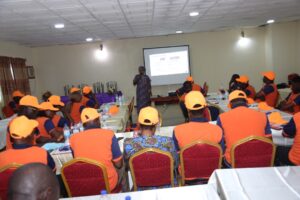
Prof. Okunlola highlighted the importance of record-keeping and effective monitoring in livestock farming.
“It is essential for trainees to understand various approaches to reaching everyone involved in the value chain.
“This training is designed to prepare them to operate farmers’ field schools and business schools, manage farm records, and access financial assistance for better marketing strategies,” he said.
He emphasized that livestock farming is not only about production but also about adopting sound business practices to achieve project objectives.
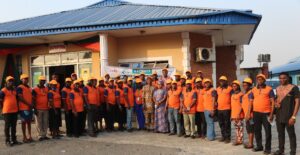
“The trainees are now equipped with increased knowledge and are expected to disseminate appropriate information to farmers and groups to improve livestock production and promote social inclusion,” he added.
At the end of the training, participants expressed their appreciation for the L-PRES Project and the state government.
Prince Adelana Adesunloye stated, “We are now equipped with the necessary knowledge about good animal husbandry practices, and we are ready to replicate what we have learned among farmers.”
Another participant, Mrs Babatunde Bosede, remarked, “This training has expanded our knowledge, particularly on gender inclusion and effective animal handling.
“We are now better prepared to assist farmers and encourage their involvement in livestock production.”
Mr Arokoyu Ojo described the training as “an eye-opener” and a critical step in addressing challenges faced by farmers.
He added, “This training has equipped us to play a pivotal role in achieving the objectives of the project by improving livestock production and enhancing food security in the state.”
The L-PRES Project is a six-year World Bank intervention, with Ondo State being one of the twenty implementing states in the federation.