


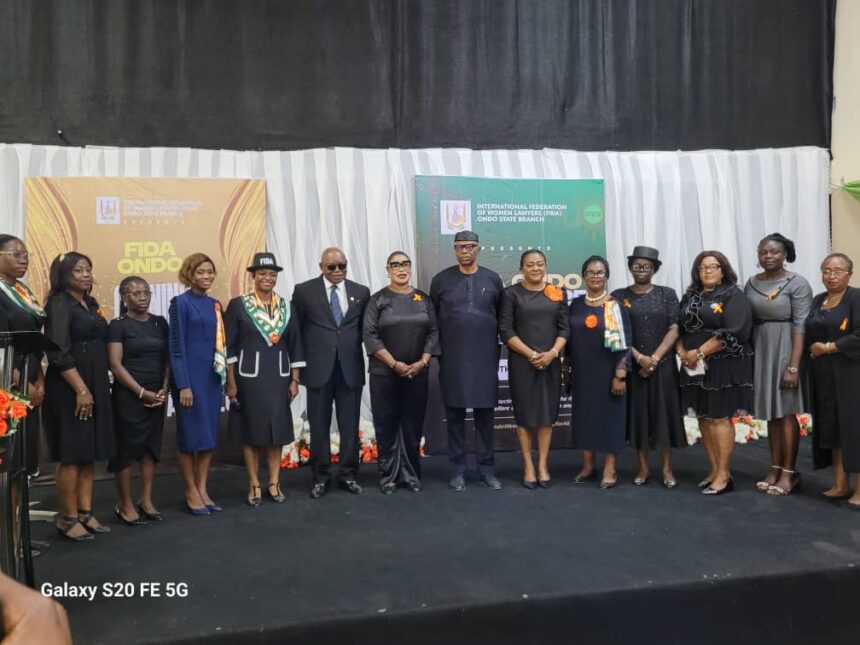
FIDA Ondo Week: “Seven Women Die Every Hour: Mimiko Declares Nigeria’s Maternal Crisis a ‘Silent Mass Casualty’”
Maternal mortality has been described as an unattended violence against women perpetrated by the state, which must be addressed to save Nigerian women.
The former Governor of Ondo State, Dr Olusegun Mimiko, described maternal mortality as a “silent mass casualty.” while delivering his keynote address at the opening ceremony of FIDA Week in Akure, Ondo State, on Monday, 8 December 2025,
The theme of the week is ” Turning policy to Action: Advancing Women’s Right through Law and Governance.
Stating that seven Nigerian women die every hour from pregnancy-related causes, Mimiko affirmed that Nigeria’s 2023 maternal mortality ratio of 993 deaths per 100,000 live births is the highest in the world, surpassing Somalia, Chad and Afghanistan.

He emphasised that most maternal deaths are preventable with basic medical interventions and criticised the lack of political will to provide free maternal care. Sharing personal anecdotes, he described instances in which women in labour were unable to receive life-saving caesarean sections because they could not afford as little as ₦70,000.
He referenced his administration’s former policies, which provided completely free maternal healthcare with high-quality outcomes, demonstrating that affordability and quality can coexist when backed by political commitment.
He criticised Nigeria’s failure to domesticate key international conventions such as CEDAW, attributing delays to conservative political resistance, and highlighted the poor enforcement of protective laws like the VAPP Act, which some states have yet to domesticate.
He noted that despite constitutional limitations that classify socio-economic rights as non-justiciable, emerging judicial precedents in Africa—particularly in Uganda and South Africa—show that courts can enforce women’s rights based on constitutional rights to life, dignity and freedom from torture.
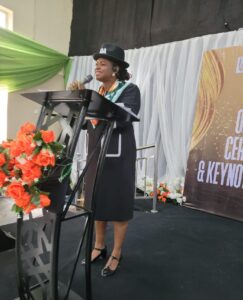
The former governor urged lawmakers, activists and civil society to increase pressure on government institutions to adopt gender quotas, fund maternal health and enforce protective laws. He emphasised that women demonstrate higher levels of incorruptibility, loyalty and social impact when empowered, calling them “more sensitive to the vulnerable” and often better stewards of household welfare.
He however warned that Nigeria’s neglect of maternal healthcare, gender equality and judicial protections fuels systemic injustice saying that “It is time for action.”
The State Chairperson of FIDA, Bolanle Olafunmiloye FCIS, listed rape, incest, trafficking, teenage pregnancy, school dropouts, harmful traditional practices and other forms of abuse as issues requiring urgent, coordinated action.
She stressed that government, the private sector, civil society and citizens must work together to address the trend, describing the gathering as a reaffirmation of FIDA’s commitment to protecting women and children.
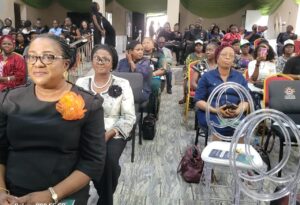
Olafunmiloye noted that FIDA Ondo had, over the past year, strengthened advocacy, community engagement and public sensitisation, particularly on the enforcement of the Violence Against Persons (Prohibition) Law. The organisation has also continued to support the prosecution of gender-based violence cases.
She reiterated that Ondo State “must not become a refuge for perpetrators of violence against women and children” and called on the public to reinforce this message.
Delivering her welcome address, the Planning Committee Chairperson, FIDAN Kudirat Gbadamosi, said the annual week provides a platform for members to reflect, share ideas and strengthen strategies for advancing women’s and children’s rights.
The programme features visits to the female correctional centre in Ondo and an orphanage home, a Jumat service, wellness sessions, a thanksgiving service, the branch’s annual general meeting, and a dinner and awards night.

Gbadamosi expressed concern over the rising cases of rape, incest and gender-based violence, warning that these issues are taking a serious toll on girls, families and marriages across the state. She stressed that children suffer the most when homes break apart.
She noted that this year’s theme, “Turning Policy into Action: Advancing Women’s Rights through Law and Governance,” reflects FIDA’s determination to address cultural, economic and institutional barriers limiting women’s participation, while strengthening legal protections against gender-based violence.
Gbadamosi urged all stakeholders to speak out and work together, insisting that the mission to protect women and children cannot be achieved in isolation.


