


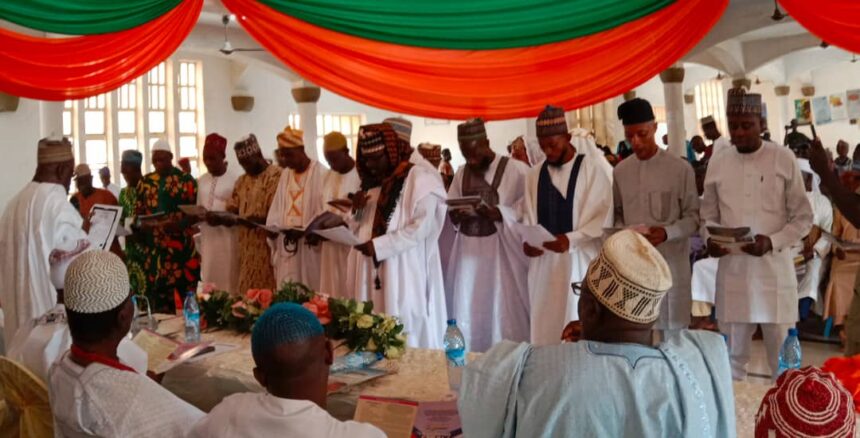
ODSCIA Inaugurates New Executive Council Tasked with Unity
The Ondo State Council for Islamic Affairs has inaugurated a new Executive Council to oversee the organization for the next three years.
The new leadership, headed by Alhaji Waidi Fadola, was inaugurated on Saturday, July 20, 2024, at the Central Mosque in Akure, the capital of Ondo State.
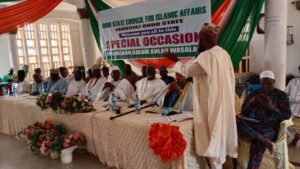
Speaking at the inauguration ceremony, Ondo State Governor Mr. Lucky Aiyedatiwa urged the new executives to work harmoniously among Muslim stakeholders to ensure unity.
The Governor noted that the absence of unity could lead to shortcomings and emphasized the council’s role in overseeing the daily activities of the Muslim ummah across the State.
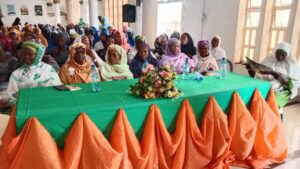
Represented by the State Commissioner for Local Government and Chieftaincy Affairs, Alhaji Amidu Takuro, Aiyedatiwa charged them to ensure free-flowing communication among themselves and all Muslim organizations.
He tasked them with training young Muslims for leadership positions in the State and the country.
The new executives assumed their roles after the tenure of the outgoing executives led by Alhaji (Imam) Abibullahi Akinpelumi expired.

The executives include: Alhaji Waidi Fadola – Chairman; Alhaji Bamidipo Maruf – Vice Chairman 1; Alhaji Saliu Olomojere – Vice Chairman 2; Imam Tesleem Yusuf – General Secretary; Alhaji Issah Olubi – Assistant General Secretary; Alhaji Muhammad Usman – Financial Secretary 1; Alhaji Ikuesan AbdulLateef – Financial Secretary 2; Alhaji AbdulRasak Omodara – Public Relations Officer 1; and Alhaji Moshood Idris – Public Relations Officer 2.
Others are: Alhaja Sidikat Omolere – Welfare Officer 1; Alhaja Amudat Muhammad – Welfare Officer 2; Alhaji Fatai Adanlawo – Organizing Secretary 1; Alhaji Seriki Yahya – Organizing Secretary 2; Alhaji Mutiu Bakare – Auditor 1; Alhaji Olaniyan AbdulHakeem – Auditor 2; Taofiq Ibrahim – Legal Adviser 1; Alhaji Muhammad Ajagunna – Legal Adviser 2; Miftau Adegboye – Legal Adviser 3.

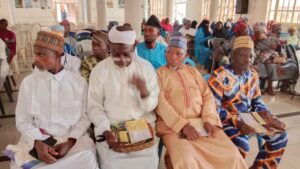
All local government Chapter chairmen, General secretaries, and Council missionaries attended the event.
The lecturer at the event, Chief Imam of the Federal University of Technology, Akure, Ondo State, Dr. Musa Idris, emphasized the importance of unity among the executives as a key factor in achieving development for Islam and its adherents in the state.
In his lecture titled “The Need for a United Muslim Ummah in Ondo State,” Idris explained that Islam is a religion of unity that discourages division, urging the executives to uphold trustworthiness in their activities.

Idris emphasized that unity strengthens political representation, enabling Muslims to establish leadership and societal structures beneficial to Muslims and the nation. Reflecting on history, the lecturer underscored the significance of political representation and policies aligned with Muslim interests, rather than partisan politics.
He encouraged them to focus on mentoring Muslim youth for Islam’s future and uphold the pillars of Allah.
The State Chairman of the League of Imams and Alfas, represented by the Chief Imam of Akure Kingdom, Alhaji AbdulHakeem Yayi-Akorede, advised the new ODSCIA chairman not to let his position cloud his judgment. He urged him to seek guidance from elders to stay on track and instructed all executive members to support the chairman for effective leadership.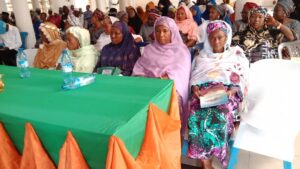
While inaugurating the new executives, the Chairman of the occasion and Baba Adini of Owo Kingdom, Alhaji (Chief) Jamiu Ekungba, charged them to recognize their responsibility as the umbrella body of Muslim associations, organizations, communities, and the League of Imams and Alfas in the state.
He stressed that these groups owned Muslims and highlighted the executives’ need for maturity and intelligence to unite and mobilize them.
He emphasized the importance of building a united, strong, and vibrant Islamic community in Ondo State, asserting that otherwise, Muslims would continue to lag in education, social matters, economy, and politics.
In his acceptance speech, the newly inaugurated Chairman, Alhaji Waidi Fadola, affirmed that they accepted their positions with trust, honesty, and loyalty to serve the Muslim community in the State.
Fadola assured the Muslim community that they would uphold the confidence placed in them and pledged to represent and serve diligently, building on the achievements of their predecessors.
Fadola described the issue of Imamship in Ikare Akoko, as an internal political matter that would soon be resolved.



