


“This Is a Humanitarian Award”: Dr Adeleye Urges Nigerians Not to Relent
….as stakeholders call for National Rebirth at African Face TV Awards
It was an evening of emotion, applause, and deep reflection as distinguished Nigerians from different sectors gathered for the African Face TV Award ceremony, where stories of service, leadership, and national renewal took centre stage.
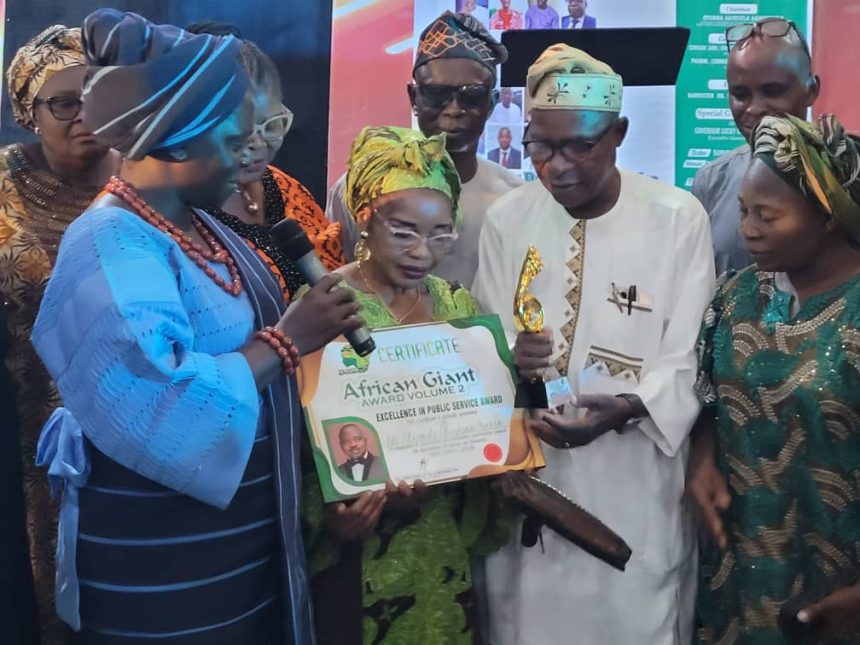
Among the 16 honourees was the Chairman of the State Sheep and Goat Farmers Association, Dr Adeleye Olusegun Ayodeji, whose recognition drew heartfelt gratitude and a renewed commitment to service.
Visibly moved after receiving his award, Dr Ayodeji described the honour as divine grace and a responsibility rather than a personal achievement.

“I am so much grateful to God Almighty and return all glory to Him, because He is the only one who can make all these things happen,” he said.
He thanked the organisers for considering him worthy of recognition, noting that the award reflected years of dedication to promoting affordable and sustainable agricultural practices.
According to him, the honour represents service to humanity, stressing that his passion has always been rooted in improving livelihoods within and beyond the farming community.
“This award is meant for humanity,” he added, dedicating the recognition to the people he serves and urging Nigerians to remain consistent in their efforts, no matter the challenges.
“Whatever we are doing, we should not relent. When you keep pushing, you will get there. Let people know you through good works,” he advised.
The ceremony also featured the Chief Executive Officer of African Face TV, Mrs. Oluwaseun Akinbileje , who used the occasion to spotlight the growing importance of recognising impactful leadership across sectors.

She described the awardees as “pillars of leadership, innovation, and community development,” noting that the ceremony was designed to celebrate individuals who have distinguished themselves in service to humanity.
“Today, we celebrate women who represent a rich blend of leadership, vision, and service. They are builders of institutions, mentors of youth, drivers of innovation, and champions of community development,” she said.
The event honoured several notable figures, including Dr Sylvester Olumuyiwa Adu, Comrade Christopher Abimola Arapasopo and comrade Kolapo Joshua.

Also recognised were Faniyi Olagoke, Dr Olusegun Ayodeji Adeleye, Princess Wuraola Adebola Akinbobola, HEM Evan. Oluwaduyilemi Idowu Micheal, comrade Akintoroye Fredrick Alhaji Zubairu Musa among several ithers.
Mrs Akinbileje emphasised that all recipients were carefully selected based on character, competence, and measurable societal impact, adding that such recognition is vital to inspiring future generations.
However, the ceremony also carried a stronger national undertone, as a keynote lecture by Prof. Dr Ola Olalere Alaba shifted attention to Nigeria’s broader socio-economic challenges and the rising “Japa syndrome.”
Speaking on the theme “Between Home and Diaspora: Economic Choices and Living Expenses,” Dr Alaba called on the Nigeria Labour Congress (NLC) and citizens to take a more active role in reshaping the country’s future through bold civic and political engagement.
He criticised the labour movement’s focus on wage increments, arguing that such efforts must be matched with stronger demands for governance reforms, infrastructure development, and economic stability.
“The struggle for improved minimum wage, without corresponding attention to leadership quality and economic structure, does not address the root causes of hardship,” he noted.
Dr Alaba described Nigeria’s challenge as fundamentally rooted in leadership deficit, arguing that the country’s vast resources remain underutilised due to poor management and lack of vision.

He urged Nigerians to move beyond short-term electoral inducements and embrace a culture of informed decision-making during elections, warning that vote-buying and material dependence have weakened democratic accountability.
According to him, meaningful progress will only be achieved when citizens prioritise competence, integrity, and long-term development in leadership selection.
He further warned that without a collective shift in mindset among both leaders and citizens, challenges such as mass migration, poor infrastructure, and declining living standards would persist.
Calling for unity between organised labour and the general public, he advocated a joint push for good governance that would restore confidence in Nigeria’s future and reduce the growing trend of migration abroad.
Dr Alaba concluded that Nigeria’s “Japa syndrome” is not inevitable, stressing that with effective leadership and proper utilisation of national resources, the country has the capacity to retain its
talents and thrive.


