


Hunger looms as 34.7m Nigerians risk severe food insecurity – Report
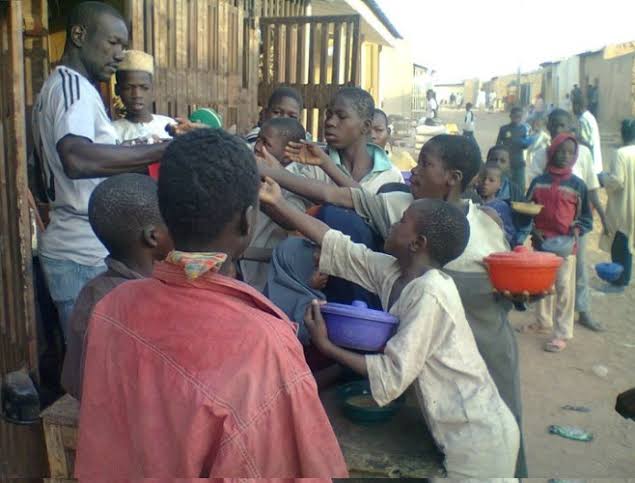
An estimated 34.7 million Nigerians in 27 states and the Federal Capital Territory (FCT) could face acute food and nutrition insecurity between June and August 2026, according to the latest Cadre Harmonisé (CH) report unveiled on Friday in Abuja.
The report, presented at the Results Presentation Workshop on the October 2025 Cadre Harmonisé Food and Nutrition Insecurity Analysis, further disclosed that about 27.2 million people, including over 485,000 internally displaced persons (IDPs), are already battling crisis or worse levels of food insecurity from October to December 2025.
The Cadre Harmonisé analysis is produced by the Federal Ministry of Agriculture and Food Security (FMAFS) with technical support from the Food and Agriculture Organization (FAO) of the United Nations and other development partners.
Declaring the workshop open, the Permanent Secretary, Federal Ministry of Agriculture and Food Security, Dr. Marcus Ogunbiyi, described the findings as a “wake-up call” that demands urgent and coordinated action to avert a worsening crisis next year.
“The results we are examining today go beyond data; they speak to the realities of millions of Nigerian households, especially those in vulnerable and crisis-affected areas. We must treat these findings as a call to sustained and coordinated action,” Ogunbiyi said.
While the report noted a slight easing in inflation and consumer price index (CPI) rates, it observed that food insecurity remains widespread across the country.
Over 55 percent of households maintaining acceptable food consumption levels reportedly relied on coping mechanisms such as eating fewer-quality meals, reducing portion sizes, or borrowing money to purchase food.
The CH analysis attributed persistently high food prices, particularly for vegetable oil, dairy products, meat, and condiments to the volatile naira-dollar exchange rate and high transport costs. Prices of these essential items reportedly rose by more than 35 percent in the review period.
“Even though staple food prices have stabilized somewhat, the cost of complementary food items and services such as food haulage remains high.
This has increased household food expenditure and eroded purchasing power,” the report stated.
The findings also showed that insecurity, high input costs, and weak rural economies continue to undermine agricultural livelihoods, particularly in the North-East, North-West, and parts of the North-Central regions.
Farmers in these areas face restricted access to farmlands due to insurgency, banditry, and kidnapping.
The rising cost of fertilisers and agrochemicals up by about 56 percent has discouraged many farmers from participating in the forthcoming 2025/2026 dry-season farming. Additionally, while food import programs have helped ease consumer prices, they have also hurt local producers, leading to losses during the 2025 cropping season.
The nutrition situation in several northern states remains critical, with Borno, Yobe, Adamawa, Katsina, and Jigawa classified between “Serious” (Phase 3) and “Critical” (Phase 4) levels of malnutrition. Areas such as Maiduguri, Jere, and Mobbar in Borno, as well as Jibia and Mashi in Katsina, have crossed into emergency phases of acute malnutrition.
However, the situation in Benue State showed some improvement, as IDP camps in Makurdi and Guma recorded “Acceptable” to “Alert” nutrition levels, attributed to ongoing targeted interventions.
The CH report also highlighted areas experiencing crisis-level mortality (Phase 3), including parts of Central and Northern Borno, Southern Adamawa, and Eastern Sokoto, while emergency-level mortality (Phase 4) was reported in Eastern Borno and Northern Adamawa.
According to the report, four key factors are driving the worsening food and nutrition crisis: insecurity (including insurgency, kidnapping, and banditry), climate shocks such as floods and prolonged dry spells, displacement from conflict and disasters, and the adverse effects of government food imports on local production.
The FAO Representative in Nigeria and ECOWAS, Dr. Hussein Gadain, commended Nigeria for sustaining its commitment to the Cadre Harmonisé process over the past decade but urged immediate, multi-sectoral action in response to the alarming findings.
“Conflict, climate extremes, and economic pressures are undermining livelihoods and food systems across the country.
The Cadre Harmonisé remains our most relevant early warning tool for guiding humanitarian and development responses,” Gadain said.
He called on states yet to participate in the CH process to do so before the March 2026 cycle to ensure comprehensive national coverage and stronger data reliability.
Both officials affirmed that the CH findings will guide the implementation of government interventions, including the National Agricultural Growth Scheme and Agro-Pocket (NAGS-AP) and the National Food Security and Nutrition Emergency Plan.